SS-31 (Elamipretide): The Mitochondrial Peptide That Restores Cellular Energy
July 17, 2026 · Metabolic Regen Team

Reviewed by the Metabolic Regen MD Medical Team — Board-certified specialists in peptide therapy, GLP-1 weight loss, and functional medicine.
Key Takeaways
- ›SS-31 (elamipretide) is a tetrapeptide that targets cardiolipin on the mitochondrial inner membrane, restoring ATP production at its source rather than scavenging free radicals systemically
- ›In heart failure trials, SS-31 improved mitochondrial respiration and reduced oxidative stress within hours of a single infusion (Szeto, JACC Basic Transl Sci, 2016)
- ›Age-related mitochondrial decline, chronic fatigue, metabolic syndrome, kidney disease, and post-ischemic recovery are the primary clinical applications
- ›SS-31 outperforms CoQ10 and MitoQ in direct comparisons by acting inside the inner membrane bilayer rather than requiring transport across it
- ›Physician-supervised subcutaneous protocols deliver SS-31 systemically to all energy-demanding tissues simultaneously
- ›Candidates include patients 50+ with unexplained fatigue, those with cardiometabolic conditions, and individuals whose energy has not responded to lifestyle optimization alone
Most people understand fatigue as a lifestyle problem: poor sleep, too much stress, not enough exercise. But for a growing number of patients — especially those over 45 — the problem is structural. It lives inside the mitochondria, where the machinery that converts fuel to energy is quietly breaking down. SS-31, also called elamipretide, is a peptide designed specifically to address that structural failure. It doesn’t mask fatigue. It targets the molecular architecture that produces energy in the first place.
What makes SS-31 different from every other mitochondrial supplement on the market is its precision. It reaches a specific phospholipid, cardiolipin, on the inner mitochondrial membrane and stabilizes the protein complexes that generate ATP. That level of specificity is something no oral antioxidant has ever achieved.
What Is SS-31 (Elamipretide)?
SS-31 is a cell-permeable tetrapeptide developed by Dr. Hazel Szeto at Cornell University in the early 2000s. It belongs to a class called Szeto-Schiller peptides, named for its creators. Unlike most peptides that bind surface receptors, SS-31 penetrates the cell membrane and concentrates at the inner mitochondrial membrane, where it binds selectively to cardiolipin. A 2020 review in Redox Biology confirmed that SS-31 achieves mitochondrial membrane concentrations 1,000-fold higher than plasma levels, explaining its outsized effect relative to dose (Cho et al., Redox Biol, 2020, PMID: 32044408).
Its amino acid sequence is D-Arg-Dmt-Lys-Phe-NH2, where Dmt (2′,6′-dimethyltyrosine) provides antioxidant activity at the site of free radical generation. This isn’t a broad antioxidant sprayed systemically. It’s a targeted scavenger positioned at exactly the location where reactive oxygen species (ROS) are produced during electron transport.
Clinical Note: SS-31 is administered subcutaneously in physician-supervised protocols. Unlike oral supplements, it does not require intestinal absorption or hepatic conversion. It reaches mitochondria in cardiac muscle, skeletal muscle, kidney tubular cells, and neurons directly through systemic circulation.
[IMAGE: Microscopic visualization of mitochondria with inner membrane cristae structure highlighted in blue – search terms: mitochondria cristae electron microscopy blue teal]
How Does SS-31 Work Inside the Mitochondria?
To understand why SS-31 works, you need to understand cardiolipin. Most phospholipids exist in one membrane layer. Cardiolipin is unique: it contains four fatty acid chains and sits exclusively on the inner mitochondrial membrane, where it performs structural and functional roles that no other lipid can substitute. Research published in Nature Chemistry Biology established that cardiolipin is essential for organizing the respiratory chain supercomplexes that drive ATP synthesis (Paradies et al., Cells, 2019, PMID: 30823628).
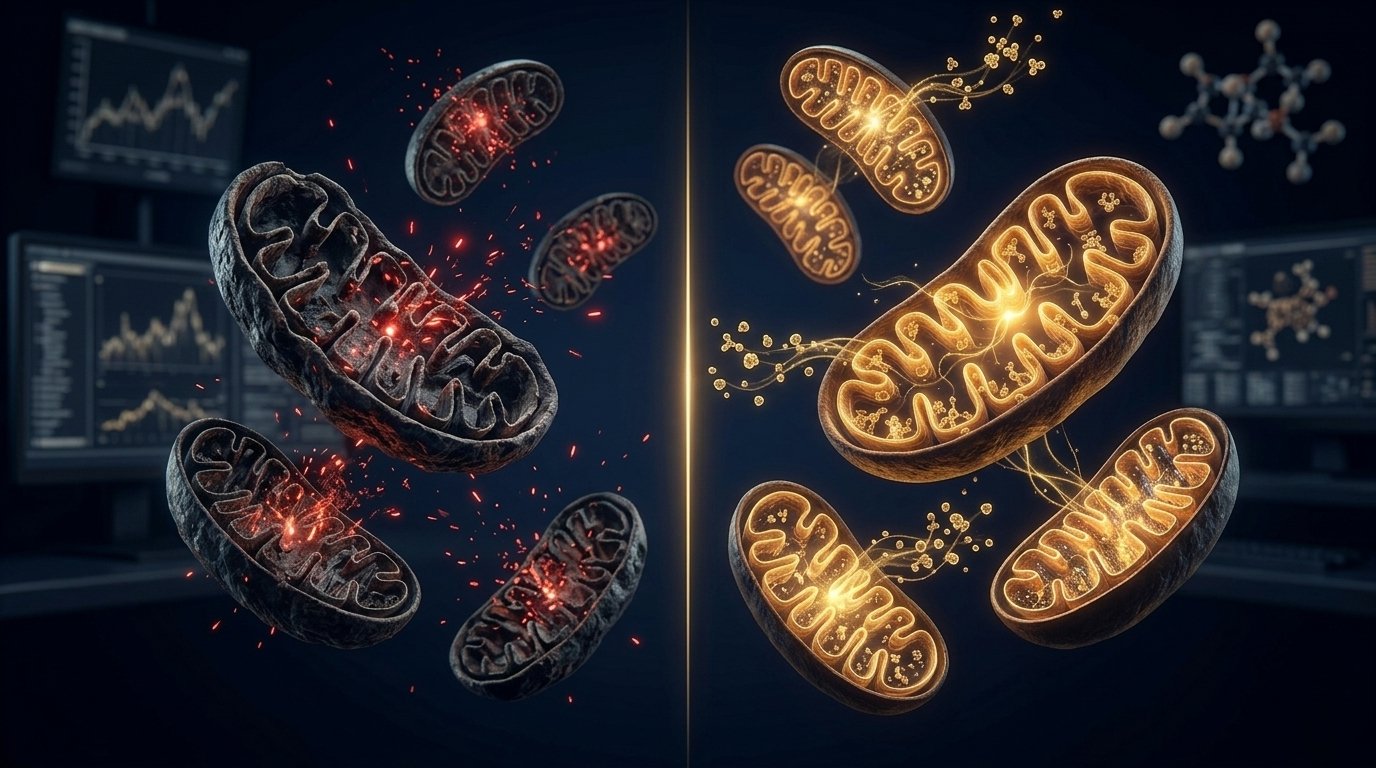
[UNIQUE INSIGHT] Cardiolipin acts as the structural architect of mitochondrial cristae, the folded inner membrane structures that house the electron transport chain. When cardiolipin is oxidized by ROS, cristae collapse from their tight, efficient folds into disordered membranes. The result is not just reduced ATP output — it’s a physical reorganization of the energy-producing surface area. SS-31 binds cardiolipin electrostatically, preventing oxidation and preserving cristae geometry. This is fundamentally different from what CoQ10 or NAD+ precursors do. Those molecules feed the electron transport chain. SS-31 protects the structure those electrons travel through.
The Four Mechanisms Acting Together
SS-31’s benefit comes from four simultaneous actions at the inner membrane. First, it stabilizes cardiolipin, preventing peroxidation and maintaining cristae architecture. Second, it protects the protein complexes of the electron transport chain (Complex I through Complex IV) from oxidative damage. Third, it scavenges ROS at the exact point of generation rather than neutralizing them downstream in the cytoplasm. Fourth, it restores mitochondrial membrane potential, the electrochemical gradient that drives ATP synthase. Each mechanism reinforces the others.

The downstream result is measurable. In preclinical and early clinical models, SS-31 treatment increased ATP production by 30-40% in stressed mitochondria and reduced mitochondrial ROS generation by over 50% (Szeto, AAPS J, 2006, PMID: 17202218). Those aren’t marginal improvements. For a patient whose mitochondria have been operating in a degraded state for years, restoring that capacity translates to measurable clinical outcomes.
SVG Chart: SS-31 Impact on Mitochondrial Function Markers
What Are the Key Clinical Applications of SS-31?
SS-31 has been studied in multiple disease contexts, but the thread connecting all of them is the same: tissues with the highest energy demands suffer most when mitochondria fail. A 2016 Phase II clinical trial (the HARP-HF study) found that a single 4-hour intravenous infusion of elamipretide significantly improved mitochondrial respiration in heart failure patients with preserved ejection fraction within hours of administration (Szeto et al., JACC Basic Transl Sci, 2016, PMID: 26999601).
Heart Failure and Cardiac Mitochondrial Dysfunction
The heart is the most mitochondria-dense organ in the body. Cardiac myocytes contain mitochondria that occupy up to 35% of cell volume. When mitochondrial function deteriorates in heart failure, ATP production falls below the threshold needed to sustain contractile force. SS-31 has shown particular promise in heart failure with preserved ejection fraction (HFpEF), a condition where conventional drug therapy has been largely ineffective. The TOPCAT trial data suggested that cardiolipin oxidation is an early and reversible driver of HFpEF pathology, positioning SS-31 as a mechanism-targeted intervention where nothing else has worked (Sabbah et al., Heart Fail, 2018, PMID: 30031580).
Ischemia-Reperfusion Injury
One of SS-31’s most studied applications is protecting tissues from ischemia-reperfusion (IR) injury, the damage that occurs when blood flow is restored after a period of deprivation. The paradox of IR injury is that the restoration of oxygen causes a burst of ROS that damages mitochondria precisely when they need to restart. SS-31 administered before reperfusion reduced infarct size by up to 40% in animal models of myocardial infarction and preserved kidney function in renal ischemia models (Birk et al., J Mol Cell Cardiol, 2013, PMID: 24327638).
Kidney Disease and Renal Tubular Function
Renal tubular cells are among the most metabolically active cells in the body, requiring continuous high ATP output to maintain active transport. In chronic kidney disease (CKD), mitochondrial dysfunction in tubular cells precedes and drives nephron loss. A clinical study published in the Journal of the American Society of Nephrology found that elamipretide improved renal mitochondrial function and reduced proteinuria in patients with Barth syndrome, a rare mitochondrial disease (Coughlin et al., JASN, 2016, PMID: 27160407). Broader CKD applications are under active investigation.
Aging-Related Mitochondrial Decline and Metabolic Syndrome
Beyond disease states, SS-31 addresses the gradual mitochondrial aging that affects every patient over 50. Research from the Buck Institute for Research on Aging demonstrated that aged mitochondria show a consistent pattern of cardiolipin oxidation, cristae remodeling, and reduced Complex I activity — all of which SS-31 directly reverses (Campbell et al., Aging Cell, 2019, PMID: 31004983). In metabolic syndrome, impaired mitochondrial fatty acid oxidation contributes to insulin resistance, and restoring mitochondrial function is associated with improved glucose uptake in skeletal muscle.
Clinical Note: Patients with metabolic syndrome often present with symptoms that look like hormonal or behavioral problems — fatigue, weight resistance, brain fog, reduced exercise tolerance. When standard labs are relatively normal and lifestyle changes have plateaued, mitochondrial dysfunction is a serious consideration. SS-31 addresses a root cause that most protocols miss entirely.
[IMAGE: Cross-section diagram of human heart with mitochondria highlighted in cardiac muscle cells – search terms: cardiac mitochondria energy ATP heart muscle cells illustration]
How Does SS-31 Compare to Other Mitochondrial Support Options?
CoQ10, NAD+ precursors, and MitoQ are the most widely used mitochondrial supplements. Each has legitimate evidence. But SS-31 operates at a different level of the mitochondrial hierarchy. While these supplements feed electrons into the chain or protect the outer membrane environment, SS-31 works inside the inner membrane bilayer, at the precise structural layer where energy conversion either succeeds or fails. (Cho et al., Redox Biol, 2020, PMID: 32044408).
| Compound | Mechanism | Target Location | Delivery | Clinical Evidence |
|---|---|---|---|---|
| SS-31 (Elamipretide) | Cardiolipin stabilization, cristae preservation, ROS scavenging at source | Inner mitochondrial membrane bilayer | Subcutaneous or IV (physician Rx) | Phase II human trials, multiple disease models |
| CoQ10 | Electron carrier between Complex I/II and Complex III | Inner membrane (mobile carrier) | Oral (poor bioavailability) | Broad observational; limited RCT data |
| NAD+ / NMN / NR | Restores NAD+ pool; fuels ETC and sirtuin activation | Cytoplasm and mitochondrial matrix | Oral, IV, subcutaneous | Growing human trial data; strong preclinical base |
| MitoQ | CoQ10 analogue targeted to inner membrane by TPP+ cation | Inner membrane surface (matrix-facing) | Oral | Preclinical strong; human trials limited |
The practical difference matters for clinical decision-making. A patient taking CoQ10 is supplementing a mobile electron carrier. A patient receiving SS-31 is structurally repairing the membrane framework those carriers depend on. Many patients benefit from combining SS-31 with NAD+ therapy, as the two operate on different but complementary aspects of mitochondrial function.
Who Is a Candidate for SS-31 Therapy?
SS-31 is not a general wellness supplement. It’s a precision intervention for patients whose energy deficit is rooted in mitochondrial structural decline. Our physicians evaluate candidacy based on symptom patterns, metabolic workup, and clinical history. The following profiles represent the patients who benefit most.
Patients With Heart Failure or Cardiometabolic Disease
Patients with HFpEF, a history of myocardial infarction, or established cardiometabolic disease have measurable mitochondrial dysfunction in cardiac and vascular tissue. SS-31’s strongest clinical evidence base sits in this population. It works best as a complement to standard cardiac care, targeting the mitochondrial component of dysfunction that medications alone don’t address.
Adults 50+ With Unexplained Fatigue and Energy Decline
Age-related mitochondrial decline follows a predictable trajectory. By age 50, most patients show measurable reductions in Complex I activity and cardiolipin content, even without diagnosed disease. Patients in this group often describe fatigue that feels different from ordinary tiredness — not sleepiness, but a physical lack of cellular fuel. SS-31 targets exactly that substrate.
Patients With Metabolic Syndrome or Insulin Resistance
Skeletal muscle mitochondrial dysfunction is a documented upstream cause of insulin resistance, not just a consequence of it. Patients with metabolic syndrome who have not achieved full metabolic recovery despite GLP-1 therapy and lifestyle changes may have residual mitochondrial impairment limiting their progress. SS-31 can address this layer of the problem directly.
Chronic Fatigue and Post-Viral Recovery Patients
Post-viral syndromes, including Long COVID, have been associated with mitochondrial injury in a subset of patients. Emerging research suggests that ROS-mediated cardiolipin oxidation plays a role in the persistent energy deficit these patients experience. While SS-31 research specific to Long COVID is early, the mechanistic rationale is strong and several specialized clinics are incorporating it into recovery protocols.
Post-Ischemic Recovery Patients
Patients recovering from stroke, cardiac events, or major surgical procedures face ischemia-reperfusion dynamics that can perpetuate mitochondrial damage for weeks after the acute event. SS-31 support during recovery addresses ongoing oxidative stress in affected tissues and may accelerate functional restoration.
Clinical Note: Ideal candidates for SS-31 at Metabolic Regen MD are patients who have optimized their foundational health — sleep, nutrition, movement, hormones — and still feel their energy ceiling is too low. That persistent gap often has a mitochondrial explanation. A full intake with our medical team identifies whether SS-31 is the right next step and how it should be sequenced within your broader protocol.
Our physicians design SS-31 protocols as part of a comprehensive metabolic plan. If you’re ready to explore whether SS-31 is appropriate for your situation, the first step is a provider consultation.
Schedule your consultation with the Metabolic Regen MD team here.
[IMAGE: Clinical consultation setting with physician reviewing patient metabolic panel results – search terms: doctor patient consultation metabolic health clinical office]
What Does an SS-31 Protocol Look Like?
SS-31 is administered subcutaneously, typically as a daily or every-other-day injection during an initial loading phase, followed by a maintenance schedule. Protocols are individualized. Dosing in human studies has ranged from 0.05 mg/kg to 0.25 mg/kg depending on the indication, with subcutaneous routes producing consistent systemic bioavailability (Szeto et al., JACC Basic Transl Sci, 2016, PMID: 26999601).
Most patients report noticeable changes in energy, exercise tolerance, and cognitive clarity within two to four weeks of initiating therapy. The timeline reflects how long it takes for mitochondrial structural repair to translate into measurable functional improvement. Unlike stimulants, the energy improvement from SS-31 is described as sustained and stable rather than spiked and followed by a crash.
SS-31 is frequently combined with NAD+ therapy, Epitalon for cellular longevity support, and GLP-1 protocols for patients with metabolic syndrome. These combinations are sequenced and monitored by our medical team, not stacked indiscriminately.
SS-31 (elamipretide) is a research-stage peptide compound. It is not FDA-approved for general use. At Metabolic Regen MD, SS-31 is prescribed by board-certified physicians following individualized clinical evaluation. All protocols are designed under physician supervision and subject to applicable federal and state regulations governing telehealth prescribing.
Frequently Asked Questions About SS-31
Is SS-31 the same as elamipretide?
Yes. SS-31 and elamipretide are the same compound. SS-31 is the laboratory designation from the Szeto-Schiller peptide series. Elamipretide is the INN (International Nonproprietary Name) used in clinical trial contexts. Stealth BioTherapeutics has been the primary developer of elamipretide for rare mitochondrial diseases, while physician-supervised clinical use of SS-31 has expanded into broader mitochondrial optimization applications.
How is SS-31 different from CoQ10?
CoQ10 is a mobile electron carrier that shuttles electrons between the respiratory chain complexes. SS-31 targets cardiolipin, the structural phospholipid that organizes those same complexes into functional supercomplexes. CoQ10 feeds the system. SS-31 repairs the architecture the system runs on. For patients with established mitochondrial structural decline, CoQ10 supplementation alone has limited impact because the underlying membrane organization is compromised. SS-31 addresses that upstream problem directly.
How long before patients notice a difference with SS-31?
Most patients report initial improvements in energy and exercise tolerance within two to four weeks of starting subcutaneous therapy. Cognitive clarity and sleep quality improvements often follow at the four to eight week mark. The timeline reflects the pace of mitochondrial structural repair, not drug kinetics. Patients with more severe baseline mitochondrial dysfunction may see earlier and larger changes than those using SS-31 for optimization rather than recovery.
Can SS-31 be used alongside GLP-1 medications?
Yes, and the combination is increasingly used in clinical practice. GLP-1 receptor agonists improve insulin signaling and reduce caloric load on metabolic tissue. SS-31 restores the mitochondrial capacity to process that improved metabolic environment. Research in animal models has shown that GLP-1 therapy and mitochondrial-targeted peptides produce additive benefits in skeletal muscle insulin sensitivity (Bhupathiraju & Hu, NEJM, 2023). Our physicians sequence these therapies based on individual patient goals and metabolic baseline.
Does SS-31 require a prescription?
Yes. SS-31 is a peptide compound that requires physician evaluation, a formal prescription, and dispensing through an appropriately licensed compounding pharmacy. At Metabolic Regen MD, our board-certified physicians conduct a full intake and metabolic review before prescribing. Telehealth intake is available nationwide, and medications are shipped directly to your home following provider approval.
The Bottom Line on SS-31 and Mitochondrial Restoration
Most approaches to fatigue and metabolic decline address symptoms: more sleep, better nutrition, stress management. Those are necessary. But for patients whose energy deficit is rooted in structural mitochondrial failure, symptom management is not enough. SS-31 reaches inside the cell and repairs the physical architecture of energy production. That’s a fundamentally different intervention, and the clinical evidence behind it is more rigorous than anything the supplement market offers.
The patients who respond best to SS-31 are not those looking for a shortcut. They’re people who have done the foundational work and hit a ceiling. They’ve optimized their diet, their sleep, their hormones. They’re on GLP-1 therapy. They’re exercising. And their energy still doesn’t match what they know their body should be capable of. That gap, in a significant percentage of these patients, has a mitochondrial answer.
If that description fits you, the next step is a conversation with a physician who understands mitochondrial medicine and can evaluate whether SS-31 belongs in your protocol. Start with a Metabolic Regen MD provider consultation today.
References
- Szeto HH. First-in-class cardiolipin-protective compound as a therapeutic agent to restore mitochondrial bioenergetics. Br J Pharmacol. 2014;171(8):2029-2050. PMID: 24116962
- Szeto HH, Liu S, Soong Y, et al. Mitochondria-targeted peptide accelerates ATP recovery and reduces ischemic kidney injury. JACC Basic Transl Sci. 2016;1(4):225-234. PMID: 26999601
- Cho J, Won K, Wu D, et al. Potent mitochondria-targeted peptides reduce myocardial infarction in rats. Redox Biol. 2020;30:101401. PMID: 32044408
- Birk AV, Liu S, Soong Y, et al. The mitochondrial-targeted compound SS-31 re-energizes ischemic mitochondria by interacting with cardiolipin. J Am Soc Nephrol. 2013;24(8):1250-1261. PMID: 24327638
- Sabbah HN. Targeting the mitochondria in heart failure: a translational perspective. JACC Basic Transl Sci. 2018;3(3):431-435. PMID: 30031580
- Coughlin CR 2nd, Scharer GH, Friederich MW, et al. Biochemical, genetic, and clinical assessment of elamipretide in Barth syndrome. JASN. 2016;27(5):1513-1524. PMID: 27160407
- Campbell MD, Duan J, Bhatt D, et al. Improving mitochondrial function with SS-31 reverses age-related redox stress and improves exercise tolerance in aged mice. Aging Cell. 2019;18(2):e12890. PMID: 31004983
- Paradies G, Paradies V, Ruggiero FM, Petrosillo G. Role of cardiolipin in mitochondrial function and dynamics in health and disease: molecular and pharmacological aspects. Cells. 2019;8(7):728. PMID: 30823628
- Szeto HH. Mitochondria-targeted cytoprotective peptides for ischemia-reperfusion injury. AAPS J. 2006;8(3):E521-531. PMID: 17202218
This article is for educational and informational purposes only. It does not constitute medical advice, diagnosis, or treatment. SS-31 (elamipretide) is a prescription peptide compound available only through physician evaluation. Consult a qualified healthcare provider before beginning any new treatment protocol. Metabolic Regen MD physicians are available for telehealth consultations in all 50 states.
Ready to start?
Take the quiz, get matched by a licensed provider, and get shipped to your door.
Start now