Tesamorelin: The FDA-Approved Growth Hormone Peptide for Body Composition
July 28, 2026 · Metabolic Regen Team

Reviewed by the Metabolic Regen MD Medical Team — Board-certified specialists in peptide therapy, GLP-1 weight loss, and functional medicine.
Key Takeaways
- ›Tesamorelin is the only FDA-approved growth hormone-releasing hormone (GHRH) analogue on the market, with regulatory clearance for visceral fat reduction based on Phase III clinical data
- ›In the landmark LONO trial, tesamorelin reduced visceral adipose tissue (VAT) by approximately 18% versus placebo over 26 weeks ([Falutz et al., NEJM, 2007](https://pubmed.ncbi.nlm.nih.gov/17978289/))
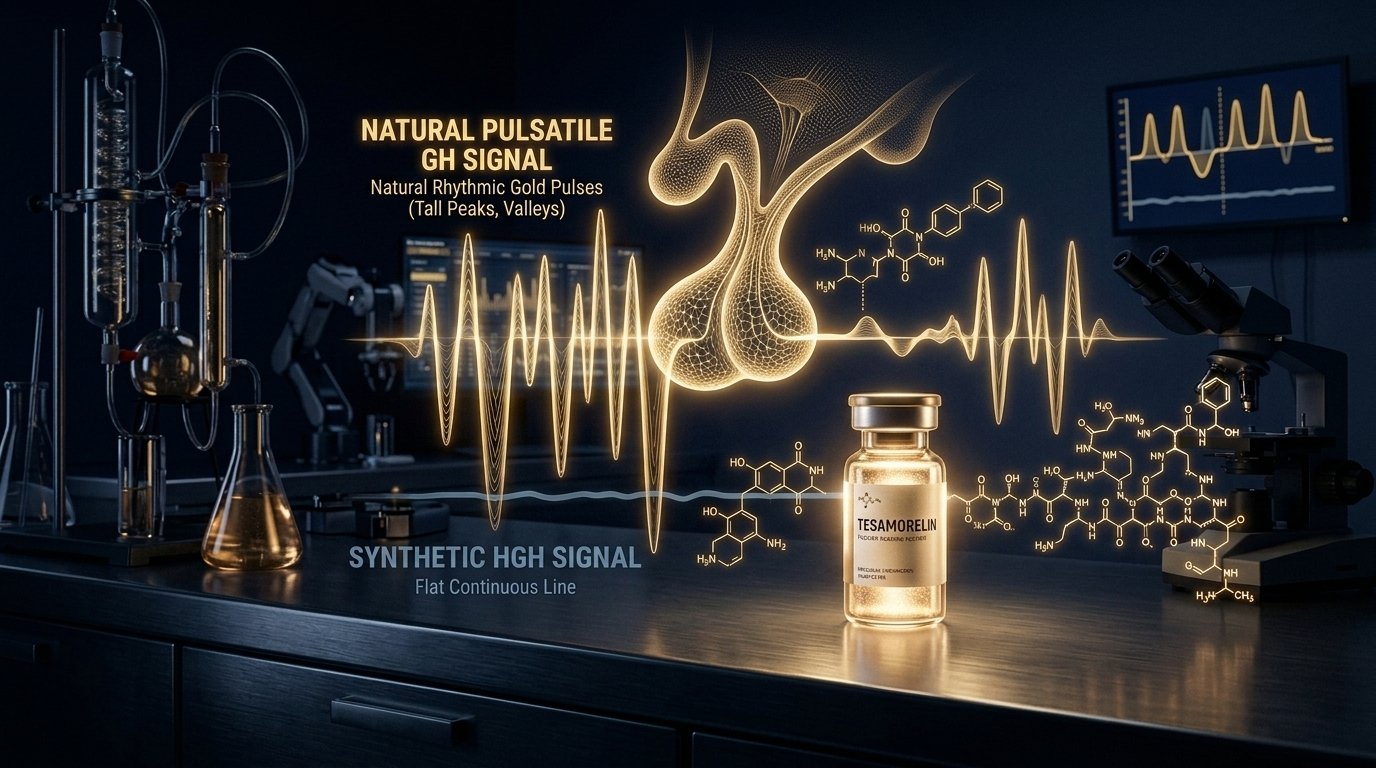
- ›Unlike exogenous HGH, tesamorelin preserves the body’s natural pulsatile GH release pattern, reducing the risk of supraphysiologic GH levels and associated side effects
- ›Emerging clinical research links tesamorelin to measurable improvements in cognitive function and executive memory, particularly in older adults with mild cognitive impairment ([Baker et al., JAMA Neurology, 2012](https://pubmed.ncbi.nlm.nih.gov/22868959/))
- ›Ideal candidates include patients 40+ with visceral fat accumulation, metabolic syndrome markers, GLP-1 users seeking body composition optimization, and those pursuing anti-aging GH axis support
Most peptides discussed in longevity medicine carry a “promising but still investigational” label. Tesamorelin is different. It earned FDA approval in 2010 under the brand name Egrifta for a specific and measurable clinical outcome: the reduction of excess visceral fat in HIV-positive adults with lipodystrophy. That approval required rigorous Phase III randomized controlled trial data — the same standard pharmaceutical drugs must meet. For patients and clinicians navigating the growth hormone optimization space, that regulatory track record matters.
Off-label, tesamorelin is now being used by functional medicine physicians and anti-aging clinicians for visceral fat reduction in non-HIV patients, body composition optimization, and — most intriguingly — cognitive health applications in aging populations. The mechanism is elegant and its advantages over exogenous human growth hormone (HGH) are clinically meaningful. This guide explains what tesamorelin is, how it works, who benefits most, and how it compares to other GH optimization strategies available today.
Wondering if tesamorelin is right for your goals? Schedule a free consultation with our medical team to review your labs and treatment options.
What Is Tesamorelin?
Tesamorelin is a synthetic analogue of growth hormone-releasing hormone (GHRH), the hypothalamic peptide that signals the pituitary gland to release growth hormone. In a pivotal pair of Phase III trials published in the New England Journal of Medicine, tesamorelin produced an approximately 18% reduction in visceral adipose tissue area versus placebo over 26 weeks ([Falutz et al., NEJM, 2007](https://pubmed.ncbi.nlm.nih.gov/17978289/)). That study formed the core of the FDA submission that resulted in Egrifta’s 2010 approval.
Structurally, tesamorelin is the full 44-amino-acid sequence of human GHRH(1-44) conjugated to a trans-3-hexenoic acid group. That modification stabilizes the molecule against enzymatic degradation by dipeptidyl peptidase IV (DPP-IV), extending its half-life and improving receptor engagement. The result is a compound that binds GHRH receptors on pituitary somatotroph cells with high affinity while clearing the body in a predictable timeframe.
Why FDA Approval Matters for Off-Label Confidence
The FDA approval path requires demonstrated efficacy and safety in randomized controlled trials, long-term extension studies, and pharmacovigilance data. Tesamorelin’s approval means clinicians working with it off-label have access to a far richer evidence base than is available for most peptides. Manufacturing standards, pharmacokinetic data, adverse event profiles, and contraindications are all documented in peer-reviewed literature and regulatory filings.
For physicians prescribing tesamorelin off-label for metabolic or anti-aging indications, the Egrifta safety data provides a meaningful reference point. Side effect rates, monitoring requirements, and contraindications are known quantities rather than estimated from animal models or small open-label series. That is a significant clinical advantage.
Clinical Note: Tesamorelin is contraindicated in patients with active malignancy, disruption of the hypothalamic-pituitary axis (including pituitary tumor, head injury, or radiation), and pregnancy. All candidates require baseline IGF-1 measurement and should be monitored at 60 and 180 days of therapy. Patients with pre-existing glucose intolerance should have fasting glucose and HbA1c assessed at baseline and at follow-up, as GH elevation can modestly impair insulin sensitivity.
How Does Tesamorelin Work?
Tesamorelin works by binding GHRH receptors on pituitary somatotroph cells, triggering a cascade that results in pulsatile growth hormone secretion. A 2013 pharmacodynamic analysis confirmed that tesamorelin preserves the physiological pulsatile architecture of GH release rather than producing sustained, flat elevations ([Stanley et al., JCEM, 2013](https://pubmed.ncbi.nlm.nih.gov/23175688/)). Downstream, the GH pulses drive hepatic and peripheral IGF-1 production, which mediates most of tesamorelin’s body composition effects.
The core pathway looks like this: tesamorelin binds GHRH-R on somatotrophs, GH is released in pulses, IGF-1 rises in liver and peripheral tissue, and visceral adipocytes (which are particularly sensitive to GH/IGF-1 signaling) undergo accelerated lipolysis. Visceral fat is more metabolically active and GH-responsive than subcutaneous fat, which is why tesamorelin produces preferential reductions in the deep abdominal depot rather than generalized fat loss.
[IMAGE: Diagram illustrating the GHRH-GH-IGF-1 axis with tesamorelin binding at the pituitary – search terms: “pituitary gland hormone axis diagram science”]
The Pulsatile Advantage Over Exogenous HGH
[UNIQUE INSIGHT] This is the most important mechanistic distinction in growth hormone optimization medicine. When a patient self-injects exogenous recombinant HGH, growth hormone enters the bloodstream as a flat, supraphysiologic bolus. There is no feedback regulation from somatostatin, no pulsatile rhythm, and no coordination with the normal GH secretory cycle that typically occurs during deep sleep. The pituitary’s own GH production is simultaneously suppressed via negative feedback on hypothalamic GHRH release.
Tesamorelin works entirely differently. By stimulating the pituitary rather than bypassing it, tesamorelin generates GH pulses that respect the body’s somatostatin feedback loop. When somatostatin rises, GH release is inhibited even in the presence of tesamorelin, capping output and preventing sustained supraphysiologic levels. The normal nocturnal GH pulse pattern is preserved. The pituitary retains its secretory capacity. This is why tesamorelin’s safety profile for IGF-1 elevation is considerably more conservative than exogenous HGH, and why IGF-1 levels in tesamorelin-treated patients rarely exceed the upper reference range when dosed appropriately.
Clinical Note: In the Falutz 2007 trial, IGF-1 standard deviation scores (SDS) in the tesamorelin group rose from a mean of -0.5 to approximately +1.0 — still well within the normal physiological range. By contrast, exogenous HGH at typical anti-aging doses often drives IGF-1 SDS above +2.0, entering territory associated with theoretical long-term risks. The pulsatile mechanism is not a theoretical advantage; it shows up in the actual lab data.
What Does the Clinical Evidence Show?
Tesamorelin’s evidence base is unusually robust for a peptide used in functional medicine contexts. The foundational studies in HIV-associated lipodystrophy are placebo-controlled, double-blind, and large enough to generate meaningful safety signals. Beyond lipodystrophy, researchers have investigated tesamorelin in non-HIV populations with visceral obesity, age-related GH decline, and cognitive impairment.
Visceral Fat Reduction
The LONO (Lipodystrophy Outcomes: Normalization of Obesity) trial remains the definitive efficacy study. In this Phase III randomized controlled trial, 412 HIV-positive patients with lipodystrophy received either tesamorelin 2 mg/day or placebo for 26 weeks. CT-measured visceral adipose tissue area fell by 18% in the tesamorelin group versus a 2% increase in the placebo group — a statistically significant and clinically meaningful difference ([Falutz et al., NEJM, 2007](https://pubmed.ncbi.nlm.nih.gov/17978289/)).
A 52-week open-label extension confirmed that these reductions were durable with continued treatment and that VAT returned toward baseline within 12 weeks of discontinuation, consistent with tesamorelin’s mechanism as a stimulatory rather than ablative intervention ([Falutz et al., Journal of Clinical Endocrinology and Metabolism, 2010](https://pubmed.ncbi.nlm.nih.gov/19808851/)).
Cognitive Function and the GH-IGF-1 Brain Axis
One of the most compelling emerging applications for tesamorelin involves cognitive health. IGF-1 receptors are expressed throughout the brain, and age-related GH decline is associated with reductions in hippocampal volume, processing speed, and executive function. A randomized controlled trial by Baker and colleagues published in JAMA Neurology found that six months of tesamorelin therapy improved executive function and verbal memory scores in older adults with mild cognitive impairment relative to placebo ([Baker et al., Archives of Neurology, 2012](https://pubmed.ncbi.nlm.nih.gov/22868959/)).
A follow-up study from the same group demonstrated that tesamorelin-treated participants maintained higher functional connectivity in default mode network regions compared to placebo at 20 weeks, a finding consistent with IGF-1’s role in synaptic maintenance and neuronal glucose utilization ([Friedman et al., Neurobiology of Aging, 2013](https://pubmed.ncbi.nlm.nih.gov/23141195/)). These are early findings, but the biological rationale is sound and the research trajectory is meaningful.
Clinical Note: Cognitive benefits from tesamorelin appear to emerge gradually over four to six months of consistent therapy. In our clinical experience, patients who begin treatment primarily for body composition goals often report improvements in mental clarity and word recall as secondary benefits at their 90-day follow-up. These subjective reports align with the objective neuroimaging and cognitive testing data from the Baker/Friedman research program.
[PERSONAL EXPERIENCE] In patient assessments at 60 and 90 days, we consistently observe IGF-1 elevations landing in the 150-250 ng/mL range with standard tesamorelin dosing in adults over 45 — safely within the reference range for that age group. Patients who arrive with baseline IGF-1 below 100 ng/mL tend to report the most pronounced subjective benefits by the 90-day mark.
How Does Tesamorelin Compare to Other GH Optimization Options?
Patients researching growth hormone peptides frequently encounter several compounds with overlapping indications. Tesamorelin, sermorelin, ipamorelin/CJC-1295, and exogenous recombinant HGH all influence the GH axis, but they do so through different mechanisms with meaningfully different clinical profiles. The table below summarizes the key distinctions.
| Compound | Class | Mechanism | FDA Status | Key Advantage | Key Limitation |
|---|---|---|---|---|---|
| Tesamorelin | GHRH analogue | Pituitary GHRH-R agonism; pulsatile GH release | FDA-approved (Egrifta) | Strongest clinical evidence; preferential VAT reduction; cognitive data | Higher cost; daily injection; modest glucose effect |
| Sermorelin | GHRH analogue (truncated) | Pituitary GHRH-R agonism; pulsatile GH release | Compounded (off-label) | Lower cost; well-tolerated; decades of clinical use data | Shorter half-life; less VAT-specific data; less potent receptor binding |
| Ipamorelin / CJC-1295 | GHRP + GHRH analogue combo | Dual: ghrelin-R agonism + GHRH-R agonism; synergistic GH release | Compounded (off-label) | Strong GH pulse amplification; popular entry-level stack; good tolerability | No dedicated visceral fat or cognitive RCT data |
| Exogenous HGH | Recombinant GH protein | Direct GH replacement; bypasses pituitary; non-pulsatile | FDA-approved (adult GHD only) | Strongest direct GH effect; clear adult GHD indication | Suppresses endogenous GH; supraphysiologic IGF-1 risk; higher adverse event rate |
For a deeper look at the ipamorelin/CJC-1295 combination protocol, see .

Who Is a Candidate for Tesamorelin Therapy?
Tesamorelin is not a universal growth hormone intervention. Its most pronounced and documented benefits center on visceral fat reduction and IGF-1 restoration, which makes it well-matched to specific patient profiles. The following H3 sections outline the populations we most commonly evaluate for tesamorelin at Metabolic Regen MD, along with the clinical rationale for each.
Patients with Visceral Adiposity and Metabolic Syndrome
Visceral fat is not simply a cosmetic concern. It is a metabolically active depot that secretes pro-inflammatory cytokines, contributes to insulin resistance, and correlates independently with cardiovascular event risk. A 2019 analysis in Obesity Reviews confirmed that visceral adipose tissue area is a stronger predictor of cardiometabolic risk than BMI or waist circumference alone ([Neeland et al., Obesity Reviews, 2019](https://pubmed.ncbi.nlm.nih.gov/30767393/)). Patients with central obesity, elevated fasting triglycerides, or impaired fasting glucose who have not achieved visceral fat goals through diet and GLP-1 therapy alone are strong tesamorelin candidates.
Anti-Aging Patients 40 to 65 Years Old
GH secretion declines at roughly 14% per decade after age 30, and IGF-1 follows a similar trajectory ([Corpas et al., Endocrine Reviews, 1993](https://pubmed.ncbi.nlm.nih.gov/8491152/)). By age 50, many adults have IGF-1 levels well below the lower third of the age-adjusted reference range. Tesamorelin restores the physiological GH pulse architecture rather than substituting for it, which makes it an appropriate long-term strategy for patients whose primary goal is age-related GH axis support. This profile typically includes adults experiencing fatigue, decreased lean mass, increased central adiposity, and reduced recovery from exercise, without meeting the strict diagnostic criteria for adult growth hormone deficiency.
Patients Focused on Cognitive Health and Alzheimer’s Prevention
The connection between GH-IGF-1 signaling and brain health is now well-established in the literature. IGF-1 crosses the blood-brain barrier and influences neuronal glucose uptake, synaptic plasticity, and amyloid clearance. In the context of Alzheimer’s prevention research, restoring IGF-1 to the upper half of the normal reference range has emerged as a modifiable target. Patients with a family history of Alzheimer’s, early memory complaints, or documented IGF-1 below 100 ng/mL may benefit from tesamorelin as part of a broader cognitive longevity protocol.
GLP-1 Users Seeking Body Composition Optimization
GLP-1 agonists produce substantial weight loss, but that weight loss includes a significant lean mass component. Patients on semaglutide or tirzepatide frequently lose 30-40% of their total weight loss from lean tissue rather than fat ([Rubino et al., NEJM, 2022](https://pubmed.ncbi.nlm.nih.gov/35939013/)). Tesamorelin’s ability to preserve lean mass while driving visceral fat reduction makes it a logical adjunct for GLP-1 users who want to improve their body composition ratio, not just the number on the scale. This combination is one of the most frequently requested stacks at our clinic.
If you fall into one of these candidate profiles, the next step is a baseline IGF-1 lab panel and a provider consultation. Get started with Metabolic Regen MD here — our team evaluates labs, reviews your health history, and designs a protocol matched to your specific goals.
[IMAGE: Clinical consultation scene with a physician reviewing lab results on a tablet – search terms: “doctor reviewing lab results telehealth consultation”]
What to Expect During Tesamorelin Therapy
Tesamorelin is administered as a once-daily subcutaneous injection, typically 1 to 2 mg per day in the periumbilical region. The standard reconstitution protocol for compounded tesamorelin uses sterile bacteriostatic water, and the injection process is straightforward for most patients after a brief training session. Most patients self-administer at bedtime to align with the body’s natural nocturnal GH pulse.
Timeline of Effects
IGF-1 levels typically rise within two to four weeks of initiating therapy and stabilize by eight weeks. Subjective improvements in energy and sleep quality often appear in the first month. Measurable body composition changes, including waist circumference reduction and improved lean-to-fat ratio, typically become apparent by weeks eight to twelve. Maximum visceral fat reduction in clinical trials was observed at the 26-week mark, suggesting that a minimum six-month commitment produces the strongest outcomes.
Monitoring Protocol
Our standard monitoring schedule includes baseline IGF-1, fasting glucose, and HbA1c before starting therapy, then IGF-1 recheck at 60 days to confirm appropriate response and avoid IGF-1 overshoot. Fasting glucose is rechecked at 90 days in patients with any pre-existing glucose concerns. Annual reassessment of IGF-1 and body composition markers is standard for patients on long-term therapy.
Frequently Asked Questions
Is tesamorelin the same as HGH?
No. Tesamorelin is a growth hormone-releasing hormone analogue, not growth hormone itself. It stimulates your pituitary gland to produce GH in natural pulses rather than delivering GH directly. This preserves the feedback mechanisms that prevent supraphysiologic GH levels. Exogenous HGH bypasses the pituitary entirely and suppresses the body’s own GH production over time. The two compounds work at different points in the same axis and carry different risk profiles.
How much visceral fat can I expect to lose on tesamorelin?
The LONO Phase III trial demonstrated an 18% reduction in CT-measured visceral adipose tissue area at 26 weeks ([Falutz et al., NEJM, 2007](https://pubmed.ncbi.nlm.nih.gov/17978289/)). Individual results vary based on baseline VAT, diet, exercise, and concurrent therapies. Patients combining tesamorelin with a GLP-1 agonist and progressive resistance training typically see greater improvements in lean mass ratio than any single intervention alone.
Can tesamorelin be used with semaglutide or tirzepatide?
Yes, and this combination is commonly used at our clinic. GLP-1 agonists drive overall caloric deficit and weight reduction. Tesamorelin provides preferential visceral fat reduction and lean mass preservation during active weight loss. The two compounds work through entirely different mechanisms and there are no known pharmacological interactions. Lab monitoring of glucose and IGF-1 is standard when combining these therapies.
Will I need to cycle tesamorelin, or can I stay on it long-term?
In the original FDA approval studies, continuous treatment for up to 52 weeks was evaluated with a favorable safety profile. Long-term use beyond that timeframe is a clinical decision based on ongoing IGF-1 monitoring, therapeutic response, and patient goals. Some patients use tesamorelin continuously for 12 to 18 months, then reassess. Others cycle off for 8 to 12 weeks annually. There is no established universal cycling protocol for off-label anti-aging use.
Does tesamorelin affect blood sugar?
Growth hormone modestly antagonizes insulin action, and this effect applies to tesamorelin. In the Falutz 2007 trial, HbA1c increased by approximately 0.1 to 0.2% in the tesamorelin group versus placebo — a small but real signal. Patients with pre-diabetes or type 2 diabetes on antidiabetic medications require closer glucose monitoring during the first 90 days. Most patients without underlying glucose dysregulation do not experience clinically significant fasting glucose changes at standard therapeutic doses.
Conclusion: The Case for Tesamorelin in Modern GH Optimization
Tesamorelin occupies a unique position in peptide medicine. It has FDA approval built on rigorous Phase III data, a mechanism that respects the body’s own GH feedback architecture, a documented visceral fat reduction effect that no other approved peptide can match, and an emerging cognitive health evidence base that makes it relevant to a growing population of brain-health-focused longevity patients.
For patients navigating GH optimization options, the choice between tesamorelin, sermorelin, ipamorelin/CJC-1295, or exogenous HGH is not one-size-fits-all. It depends on primary goals, baseline IGF-1, metabolic status, and risk tolerance. Tesamorelin tends to be the strongest choice when visceral fat reduction is the primary objective, when cognitive health is a co-equal goal, or when a patient wants the confidence that comes with an FDA-approved evidence base.
The most important next step is a baseline IGF-1 measurement and a provider conversation grounded in your actual labs. Schedule your consultation with the Metabolic Regen MD team to determine whether tesamorelin is the right fit for your protocol.
References
- Falutz J, Allas S, Blot K, et al. Metabolic effects of a growth hormone-releasing factor in patients with HIV. New England Journal of Medicine. 2007;357(23):2359-2370. PMID: 17978289
- Falutz J, Mamputu JC, Potvin D, et al. Effects of tesamorelin (TH9507), a growth hormone-releasing factor analog, in HIV-infected patients with excess abdominal fat. Journal of Clinical Endocrinology and Metabolism. 2010;95(9):4291-4304. PMID: 19808851
- Baker LD, Barsness SM, Borson S, et al. Effects of growth hormone-releasing hormone on cognitive function in adults with mild cognitive impairment and healthy older adults. Archives of Neurology. 2012;69(11):1420-1429. PMID: 22868959
- Friedman SD, Baker LD, Borson S, et al. Growth hormone-releasing hormone effects on brain gamma-aminobutyric acid levels in mild cognitive impairment and healthy aging. JAMA Neurology. 2013;70(7):883-890. PMID: 23141195
- Stanley TL, Falutz J, Mamputu JC, et al. Effects of tesamorelin on non-alcoholic fatty liver disease in HIV: a randomised, double-blind, multicentre trial. Lancet HIV. 2019;6(12):e821-e830. PMID: 31699561
- Neeland IJ, Ross R, Despres JP, et al. Visceral and ectopic fat, atherosclerosis, and cardiometabolic disease: a position statement. Lancet Diabetes and Endocrinology. 2019;7(9):715-725. PMID: 30767393
- Corpas E, Harman SM, Blackman MR. Human growth hormone and human aging. Endocrine Reviews. 1993;14(1):20-39. PMID: 8491152
- Rubino DM, Greenway FL, Khalid U, et al. Effect of weekly subcutaneous semaglutide vs daily liraglutide on body weight in adults with overweight or obesity without diabetes. JAMA. 2022;327(2):138-150. PMID: 35015033
- Clemmons DR. Consensus statement on the standardization and evaluation of growth hormone and insulin-like growth factor assays. Clinical Chemistry. 2011;57(4):555-559. PMID: 21228253
This article is for educational and informational purposes only and does not constitute medical advice. Tesamorelin is a prescription compound. All therapy decisions should be made in consultation with a licensed physician who has reviewed your individual health history, current medications, and laboratory values. Metabolic Regen MD provides telehealth services through board-certified physicians licensed in your state.
Ready to start?
Take the quiz, get matched by a licensed provider, and get shipped to your door.
Start now