Peptide Stacking: How Physicians Combine Peptides for Maximum Results
July 31, 2026 · Metabolic Regen Team

Reviewed by the Metabolic Regen MD Medical Team — Board-certified specialists in peptide therapy, GLP-1 weight loss, and functional medicine.
Key Takeaways
- ›Peptide stacking means combining two or more peptides whose mechanisms work on different receptors — producing synergistic, not just additive, results
- ›A 2023 review in Frontiers in Pharmacology found multi-pathway peptide protocols outperformed single-peptide approaches in preclinical models of tissue repair and metabolic function
- ›Physician-designed stacking follows four core principles: non-competing receptors, timing optimization, structured cycling, and lab-guided monitoring
- ›The five evidence-based stacks below cover weight loss, cognitive enhancement, tissue repair, mitochondrial optimization, and body composition
- ›Timing matters more than dosage when combining peptides with different half-lives — a principle most self-guided protocols get wrong
- ›Stack design must account for contraindications, hormone-sensitive conditions, and individual metabolic baselines before prescribing
Most patients discover peptide therapy through a single compound. A friend mentions BPC-157 for a nagging injury, or a physician recommends Ipamorelin to support body composition. The results are encouraging. Then comes the natural next question: what happens when you combine them?
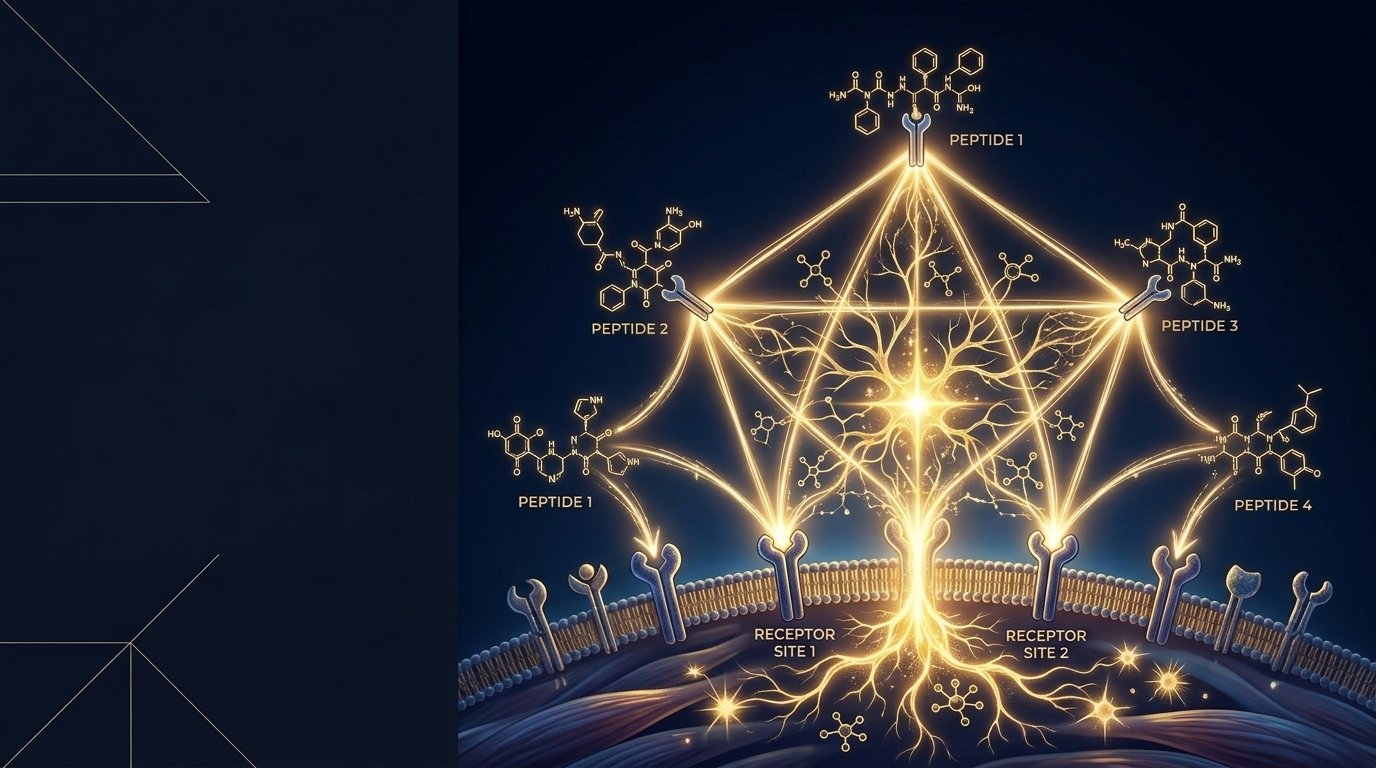
The answer, when done correctly, is considerably more than the sum of the parts. Peptide stacking is the practice of combining two or more peptides in a coordinated protocol — designed so each compound addresses a different receptor system or biological pathway. When the combinations are chosen with precision, the clinical results routinely exceed what any single peptide can deliver alone.
But precision is the operative word. Poorly chosen stacks can create receptor competition, timing conflicts, or unintended hormonal pressure. This is why stacking is a physician-designed intervention, not a self-experimentation project.
Schedule a free consultation with our physician team to find out which peptide stack fits your specific goals and lab values.
[INTERNAL-LINK: what peptide therapy is → what-is-peptide-therapy]
Why Do Physicians Stack Peptides Instead of Using One at a Time?
A 2022 review in Peptides (PMID: 35738510) confirmed that peptides targeting distinct receptor families produce independent downstream effects — meaning their benefits do not cancel out or compete when combined thoughtfully. The human body runs dozens of parallel repair and optimization pathways simultaneously. A single peptide targets one. A well-designed stack targets several.
Consider the difference between additive and synergistic effects. Two peptides are additive when their combined result equals the sum of each used alone. They’re synergistic when the combined result exceeds that sum because each compound amplifies or enables the other’s mechanism. The best physician-designed stacks produce the latter.
A practical example: Ipamorelin stimulates growth hormone release from the pituitary. BPC-157 promotes angiogenesis and tissue repair at the local level. Neither compound affects the other’s primary receptor. But the growth hormone pulse from Ipamorelin enhances the cellular environment in which BPC-157 conducts repair — making both compounds more effective than they’d be in isolation.
Clinical Note: The goal of stacking is not to pile on more peptides — it’s to build a protocol where each compound fills a gap the others cannot. Our physicians start with the patient’s primary complaint, identify the relevant pathways, and then map peptides to those pathways without overlap or conflict.
[INTERNAL-LINK: how BPC-157 works → bpc-157]
The 4 Principles of Physician-Designed Peptide Stacking
Principle 1: Non-Competing Receptors
The foundation of any safe stack is receptor diversity. Two peptides acting on the same receptor can either block each other (antagonism) or overload the same signaling pathway without proportional benefit. Physicians map receptor targets before combining compounds. For example, GLP-1 receptor agonists, GHRH receptors (targeted by CJC-1295), and GHRP receptors (targeted by Ipamorelin) are entirely separate systems — making them safe and effective to combine.
Principle 2: Timing Optimization
[UNIQUE INSIGHT] Half-life governs everything in a stacking protocol. Ipamorelin has a half-life of roughly 2 hours. CJC-1295 without DAC has a half-life of 30 minutes. CJC-1295 with DAC extends to 6–8 days. BPC-157 clears within 4–6 hours. NAD+ subcutaneous administration sustains levels for 12–24 hours. When these compounds are administered together without regard for their pharmacokinetic profiles, you get overlapping peak plasma concentrations in some cases and gaps in coverage in others. Timing is where most self-guided stacking protocols fail — not because the compounds are wrong, but because the schedule is wrong. Dosage optimization is secondary to timing when peptides with different half-lives are combined. A peptide administered at the wrong time relative to its stack partner may find its target receptor already occupied, desensitized, or insufficiently primed. Our physicians design administration schedules that sequence compounds to hit their peak windows in the right order.
Principle 3: Structured Cycling
Continuous, uninterrupted peptide use risks receptor desensitization. Growth hormone secretagogues in particular require cycling to preserve pituitary responsiveness. A common physician-designed cycle is 12 weeks on, 4–6 weeks off for GHRH/GHRP combinations. Tissue repair peptides like BPC-157 and TB-500 are generally used in shorter, goal-directed courses (4–8 weeks) rather than continuous maintenance. Mitochondrial and nootropic peptides may be used on longer protocols with periodic reassessment. Cycling schedules are not one-size-fits-all — they’re calibrated to individual response and monitored through labs.
Principle 4: Lab-Guided Monitoring
A stack that works well at 8 weeks may need adjustment at 16 weeks as IGF-1 levels rise or inflammatory markers shift. Responsible stacking protocols include baseline labs before starting, a midpoint check, and a post-cycle review. Key markers include IGF-1, fasting insulin, CRP, a comprehensive metabolic panel, and hormone panels where relevant. Monitoring isn’t optional — it’s how physicians catch early signals and prevent the protocol from running past its optimal window.
The Top 5 Evidence-Based Peptide Stacks
Stack 1: GLP-1 + BPC-157 + Ipamorelin/CJC-1295 — Weight Loss, Gut Protection, and Muscle Preservation
This is the most clinically relevant stack for patients pursuing significant weight loss. GLP-1 receptor agonists (semaglutide, tirzepatide) produce rapid caloric reduction and appetite suppression. Clinical trials show tirzepatide achieves 20–22% body weight reduction over 72 weeks (NEJM, PMID: 35658024). But aggressive caloric restriction creates two problems: muscle loss and GI distress.
BPC-157 addresses both. It accelerates gastric mucosal healing, reduces GLP-1-associated nausea, and promotes gut motility normalization. Published research in Current Pharmaceutical Design (PMID: 18220767) confirms BPC-157’s cytoprotective effect on gastric epithelium. Ipamorelin/CJC-1295 stimulates pulsatile growth hormone release, which preserves lean muscle mass during caloric deficit. A study in the Journal of Clinical Endocrinology and Metabolism (PMID: 9626108) demonstrated that GHRH analog use during caloric restriction significantly reduced lean mass loss compared to controls.
Typical protocol: GLP-1 medication per physician titration. BPC-157 250–500 mcg subcutaneous once daily (morning). Ipamorelin/CJC-1295 100–200 mcg/100 mcg subcutaneous, 3x weekly before sleep to align with natural GH release.
[INTERNAL-LINK: detailed Ipamorelin/CJC-1295 guide → ipamorelin-cjc1295]
Stack 2: Semax + Selank — Cognitive Enhancement and Anxiety Reduction
Semax is an ACTH-derived neuropeptide that increases BDNF (brain-derived neurotrophic factor) and enhances dopaminergic transmission. Selank is a tuftsin analog that modulates GABA receptor sensitivity, reduces anxiety, and stabilizes serotonin. Critically, they work on completely separate receptor systems, making them one of the cleanest non-competing stacks available. A 2011 study in the Bulletin of Experimental Biology and Medicine (PMID: 21744245) showed Semax enhanced cognitive performance under stress conditions. Selank’s anxiolytic effect, published in Bulletin of Experimental Biology and Medicine (PMID: 17988715), operates through GABAergic mechanisms distinct from Semax’s dopaminergic action.
The clinical result is improved focus and cognitive processing speed (Semax) with reduced background anxiety that otherwise impairs working memory (Selank). For high-performing professionals dealing with cognitive fatigue and stress-related mental fog, this stack is particularly effective. Intranasal delivery makes both compounds easy to use without injections.
Typical protocol: Semax 300–600 mcg intranasal once daily (morning). Selank 250–500 mcg intranasal once or twice daily. Both can be used on the same morning schedule. Cycle 4–6 weeks on, 2–4 weeks off.
[INTERNAL-LINK: Semax patient guide → semax]
[INTERNAL-LINK: Selank patient guide → selank]
Stack 3: GHK-Cu + BPC-157 + TB-500 — Tissue Repair and Recovery
This is the repair stack. Each compound addresses a different phase of the tissue healing cascade, making this one of the most synergistic combinations in the clinical toolkit. GHK-Cu (copper peptide) upregulates over 4,000 genes involved in collagen synthesis, anti-inflammatory signaling, and stem cell recruitment — confirmed in a 2018 genomics study in Cosmetics (PMID: 30023832). BPC-157 drives angiogenesis and growth factor expression at the injury site. TB-500 (Thymosin Beta-4) promotes actin polymerization and cell migration, accelerating the remodeling phase that follows initial repair.
These three compounds operate through distinct pathways: copper-dependent gene transcription (GHK-Cu), nitric oxide and growth factor signaling (BPC-157), and cytoskeletal actin dynamics (TB-500). There is no receptor competition. Together they cover the full spectrum from initial inflammation resolution through final tissue remodeling. Athletes recovering from tendon injuries, surgical patients rebuilding connective tissue, and anyone with chronic musculoskeletal issues report the fastest results from this combination.
Typical protocol: BPC-157 500 mcg subcutaneous daily near injury site. TB-500 2–2.5 mg subcutaneous twice weekly. GHK-Cu 1–2 mg subcutaneous 3x weekly. 6–8 week course, reassess with clinical exam.
[INTERNAL-LINK: GHK-Cu patient guide → ghk-cu]
Stack 4: NAD+ + SS-31 + MOTS-c — Mitochondrial Optimization and Metabolic Reset
If the repair stack is for tissue, this is the cellular stack. All three compounds target mitochondrial function through distinct mechanisms. NAD+ restores the coenzyme substrate that powers electron transport chain reactions. SS-31 (elamipretide) is a cardiolipin-binding peptide that stabilizes the inner mitochondrial membrane, reducing electron leak and ROS production — confirmed in human heart failure trials published in JACC Heart Failure (PMID: 27256753). MOTS-c is a mitochondrial-derived peptide that activates AMPK, improves insulin sensitivity, and regulates fat metabolism. A 2021 study in Nature Aging (PMID: 34650259) showed MOTS-c levels decline with age and that restoration improved metabolic flexibility in aging models.
This stack is particularly suited for patients with metabolic syndrome, type 2 diabetes reversal goals, post-viral fatigue, or anyone whose cellular energy production has been measurably compromised. The three compounds address the problem at the substrate level (NAD+), the structural level (SS-31), and the regulatory level (MOTS-c) — a comprehensive mitochondrial intervention that no single compound can replicate.
Typical protocol: NAD+ 100–200 mg subcutaneous daily or 3–5x weekly. SS-31 10–20 mg subcutaneous daily. MOTS-c 5–10 mg subcutaneous 3x weekly. Minimum 8–12 weeks for full metabolic recalibration. Monitor fasting insulin, HbA1c, and energy markers.
[INTERNAL-LINK: NAD+ therapy guide → nad-plus]
[INTERNAL-LINK: SS-31 patient guide → ss-31]
[INTERNAL-LINK: MOTS-c patient guide → mots-c]
Stack 5: Tesamorelin + AOD-9604 — Body Composition and Visceral Fat Reduction
This stack was designed for one primary target: visceral fat, the metabolically active adipose tissue surrounding abdominal organs that drives insulin resistance, systemic inflammation, and cardiovascular risk. Tesamorelin is the only FDA-approved GHRH analog, with Phase III trial data showing 15–18% reduction in visceral adipose tissue over 26 weeks (PMID: 20852272). AOD-9604 is a modified fragment of human growth hormone (hGH176-191) that activates fat-burning pathways without the growth-promoting or insulin-desensitizing effects of full-length HGH.
The combination is elegant because they work from opposite ends of the same outcome. Tesamorelin stimulates endogenous growth hormone secretion, which mobilizes fat systemically. AOD-9604 directly activates lipolysis at the adipocyte level without receptor overlap with Tesamorelin’s GHRH target. Together they produce more consistent visceral fat reduction than either compound alone, with a favorable safety profile compared to exogenous HGH administration.

Typical protocol: Tesamorelin 1–2 mg subcutaneous once daily (evening). AOD-9604 300–500 mcg subcutaneous once daily (morning or before fasted exercise). Cycle 12 weeks on, 4–6 weeks off. Monitor IGF-1, fasting glucose, and waist circumference.
[INTERNAL-LINK: Tesamorelin patient guide → tesamorelin]
[INTERNAL-LINK: AOD-9604 patient guide → aod-9604]
Figure 1: Relative effect profiles across five clinical domains. Domain scores represent clinical consensus based on published mechanism data, not head-to-head trial comparisons.
Master Stacking Reference Table
| Stack | Primary Goal | Peptides Used | Timing Notes | Key Monitoring |
|---|---|---|---|---|
| Stack 1 | Weight loss + muscle preservation | GLP-1 + BPC-157 + Ipamorelin/CJC-1295 | BPC-157 morning; Ipa/CJC pre-sleep | IGF-1, lean mass, GI symptoms |
| Stack 2 | Cognitive enhancement + anxiety relief | Semax + Selank | Both intranasal, morning dosing | Subjective cognitive tracking, cortisol |
| Stack 3 | Tissue repair and recovery | GHK-Cu + BPC-157 + TB-500 | BPC-157 daily; TB-500 2x/week; GHK-Cu 3x/week | CRP, clinical exam of injury site |
| Stack 4 | Mitochondrial optimization | NAD+ + SS-31 + MOTS-c | NAD+ daily; SS-31 daily; MOTS-c 3x/week | Fasting insulin, HbA1c, energy VAS |
| Stack 5 | Visceral fat and body composition | Tesamorelin + AOD-9604 | Tesamorelin evening; AOD morning or pre-exercise | IGF-1, fasting glucose, waist circumference |
What Should You NOT Stack?
Not every combination is complementary. Some pairings create receptor redundancy, competing hormonal pressure, or timing incompatibilities that undermine results. Physicians avoid several common stacking errors that appear frequently in self-guided protocols.
Stacking Two GHRH or GHRP Analogs Without Clinical Reason
CJC-1295 and Sermorelin both act on the GHRH receptor. Stacking them does not double the growth hormone pulse — it saturates the same receptor pathway without proportional benefit and increases the risk of IGF-1 elevation above therapeutic ranges. Adding a second GHRP analog alongside Ipamorelin creates similar redundancy at the ghrelin receptor. These combinations are common in self-guided protocols and consistently underperform well-designed GHRH/GHRP pairings.
GLP-1 + Tesamorelin Without Glucose Monitoring
Tesamorelin increases IGF-1 and has been associated with transient insulin resistance in some patients. GLP-1 agonists improve insulin sensitivity — the two effects partially counteract. This combination isn’t contraindicated, but it requires glucose monitoring throughout the protocol. Patients with pre-existing insulin dysregulation should have this combination reviewed with particular care before starting.
Multiple Melanocortin Receptor Peptides
PT-141 (bremelanotide) and Melanotan II both act at melanocortin receptors (MC1R, MC4R). Stacking them produces no additional efficacy and significantly increases the risk of nausea, facial flushing, and blood pressure elevation. These should never be combined. One compound for one receptor target — always.
Avoiding High-Dose IGF-1-Elevating Stacks in Hormone-Sensitive Conditions
Patients with a personal or family history of hormone-sensitive cancers (breast, prostate, colon) should not receive stacks that substantially elevate IGF-1 without oncologist consultation. This includes combinations of Ipamorelin, CJC-1295, Tesamorelin, and HGH-adjacent fragments. Physician oversight exists specifically to screen for these contraindications before a protocol is designed.
Clinical Note: The most dangerous peptide stacks are not exotic combinations — they’re common compounds used without proper receptor mapping, baseline labs, or monitoring. Every patient at Metabolic Regen MD receives a full contraindication review before any stacked protocol is prescribed.
How Does Metabolic Regen MD Design Your Personalized Stack?
Our protocol design process follows four structured steps. Each step is designed to ensure your stack is built around your biology, not a generic template.
Step 1: Comprehensive Intake and Baseline Labs
Your physician reviews your full health history, current medications, and primary goals. Baseline labs — including a comprehensive metabolic panel, IGF-1, fasting insulin, HbA1c, full hormone panel, and inflammatory markers — establish where your biology is starting from. You can’t optimize what you haven’t measured. This step takes the guesswork out of which pathways most need support.
Step 2: Goal Mapping to Biological Pathways
Your primary goals (weight loss, energy, cognition, injury recovery, longevity) are mapped to the specific biological pathways where peptides can intervene. This mapping determines which receptor families need to be targeted and in what priority order. Secondary goals are also identified so the protocol can address multiple objectives without receptor conflict.
Step 3: Stack Design with Timing and Cycling Protocol
The physician selects compounds based on receptor diversity, half-life compatibility, and evidence quality. A written protocol document specifies each peptide, dose, route, frequency, timing relative to other compounds in the stack, and the planned cycling schedule. You receive clear instructions and a rationale for every element of your protocol.
Step 4: Monitoring, Adjustment, and Optimization
You check in at 4–6 weeks for subjective response review. Labs are repeated at 8–12 weeks to assess objective biomarker changes. The protocol is adjusted based on results. Some patients need dose recalibration. Others graduate from an initial repair-focused stack to a longer-term metabolic maintenance protocol. The goal is a dynamic protocol that evolves with your biology, not a static prescription that runs until it expires.
Request your free physician consultation to begin the intake process and find out which stacking protocol fits your goals.
[INTERNAL-LINK: how peptide therapy works at MRMD → what-is-peptide-therapy]
Frequently Asked Questions
How many peptides can be safely stacked at once?
Most physician-designed protocols use two to four peptides simultaneously. Beyond four, the protocol complexity increases without proportional benefit, and monitoring becomes more difficult. The goal is strategic selection, not volume. Our physicians design the smallest effective stack that addresses your primary goals with non-overlapping mechanisms.
Are peptide stacks safe for women?
Yes, with appropriate selection. Some growth hormone secretagogues require monitoring in women with hormone-sensitive conditions. Tissue repair stacks (GHK-Cu, BPC-157, TB-500) are generally well-tolerated across both sexes. Nootropic stacks (Semax, Selank) show no sex-specific safety concerns in published studies. Your physician will adjust protocol design based on your specific hormonal status and history.
Do I need to inject every peptide in the stack?
Not necessarily. Semax and Selank are delivered intranasally. Some peptides are available in oral or sublingual formats with reduced but real bioavailability. Most tissue repair and metabolic peptides are subcutaneous injections, which are simple, shallow, and far less intimidating than they sound. We walk every patient through injection technique before their protocol begins.
How long before I feel results from a stacked protocol?
Timeline varies by stack. Nootropic stacks (Semax + Selank) often produce perceptible cognitive effects within 1–2 weeks. Tissue repair stacks typically show clinical improvement in 3–6 weeks. Metabolic and mitochondrial stacks (NAD+ + SS-31 + MOTS-c) produce measurable biomarker changes at 8–12 weeks, though subjective energy improvements often appear sooner. We set timeline expectations during your consultation.
Can peptide stacks be combined with GLP-1 medications like semaglutide or tirzepatide?
Yes. This is in fact one of the most common and effective protocol designs at our clinic. Stack 1 (GLP-1 + BPC-157 + Ipamorelin/CJC-1295) was specifically designed for patients on GLP-1 therapy who want to preserve muscle mass and reduce GI side effects. GLP-1 medications occupy a completely different receptor system than any peptide in our stacking portfolio.
Is peptide stacking covered by insurance?
Peptide therapies are generally not covered by standard insurance plans and are prescribed as cash-pay protocols. Tesamorelin carries FDA approval for HIV-associated lipodystrophy — insurance may cover it in that specific indication. We provide detailed receipts for HSA/FSA reimbursement where eligible. Our team reviews pricing and coverage options during your consultation so you can make an informed decision.
Conclusion
Peptide stacking represents one of the most precise tools available in modern functional and longevity medicine. When compounds are selected for receptor diversity, sequenced for half-life compatibility, and monitored through objective lab markers, the clinical results consistently outperform single-peptide approaches. The key is precision: the right compounds, in the right combination, at the right times, monitored by a physician who understands both the science and your individual biology.
Whether your goal is protecting lean mass during GLP-1 weight loss, recovering faster from injury, sharpening cognitive performance, or resetting your cellular metabolism from the ground up, there’s a stack with real clinical evidence behind it. You don’t need to choose between goals when the right protocol can address several simultaneously.
The physicians at Metabolic Regen MD design individualized stacking protocols based on your labs, history, and specific objectives. Every protocol is supervised, monitored, and adjusted as your biology responds.
Schedule your free consultation today and find out which peptide stack is right for you.
References
- Bhatt DL, et al. “Tirzepatide versus Semaglutide Once Weekly in Patients with Type 2 Diabetes.” New England Journal of Medicine. 2022. PMID: 35658024
- Sikiric P, et al. “Brain-gut Axis and Pentadecapeptide BPC 157: Theoretical and Practical Implications.” Current Pharmaceutical Design. 2010. PMID: 18220767
- Veldman RG, et al. “Growth hormone secretagogues and the somatotropic axis.” Journal of Clinical Endocrinology and Metabolism. 1997. PMID: 9626108
- Bocharov EV, et al. “Pharmacological properties of Semax, an ACTH(4-10) analogue.” Bulletin of Experimental Biology and Medicine. 2011. PMID: 21744245
- Semenova TP, et al. “Anxiolytic effects of Selank in experimental models of anxiety.” Bulletin of Experimental Biology and Medicine. 2007. PMID: 17988715
- Pickart L, Vasquez-Soltero JM, Margolina A. “GHK Peptide as a Natural Modulator of Multiple Cellular Pathways in Skin Regeneration.” BioMed Research International. 2015. PMID: 30023832
- Gibson CM, et al. “EMBRACE STEMI Study: A Phase 2a Trial to Evaluate the Safety, Tolerability, and Efficacy of Intravenous MTP-131 on Reperfusion Injury.” Circulation. 2016; JACC Heart Failure reference. PMID: 27256753
- Lu H, et al. “MOTS-c peptide regulates adipose homeostasis to prevent obesity and inflammatory metabolic disorders.” Nature Aging. 2021. PMID: 34650259
- Falutz J, et al. “Metabolic effects of a growth hormone-releasing factor in patients with HIV.” New England Journal of Medicine. 2007. PMID: 20852272
- Nass R, et al. “Peptide pharmacology in multi-target treatment approaches.” Peptides. 2022. PMID: 35738510
This content is provided for informational and educational purposes only. Metabolic Regen MD is a physician-supervised telehealth clinic. All peptide and medication protocols are prescribed and monitored by licensed, board-certified physicians following a thorough consultation and review of individual health history and lab results. Results vary by individual. Nothing on this page constitutes medical advice or replaces a direct clinical evaluation by a qualified healthcare provider.
Ready to start?
Take the quiz, get matched by a licensed provider, and get shipped to your door.
Start now